
Foods to Improve Eyesight: Keep Your Vision Sharp
The retina of predatory birds contains a hundred times more selenium than a human retina. This explains the exceptionally sharp vision of these birds. However, to keep your vision sharp, the human eye requires other essential nutrients alongside selenium. Here is a comprehensive guide to the best foods to improve eyesight.
Зміст
👀 Foods to Improve Eyesight
Humans can obtain selenium from:
- Fish;
- Squid;
- Shrimp;
- Sea kelp;
- Organ meats;
- Eggs;
- Butter;
- Sour cream.
Selenium is also highly concentrated in:
- Pumpkin and sunflower seeds;
- Black currants;
- Hawthorn berries;
- Broccoli;
- Pumpkins;
- Onions;
- Garlic;
- Mushrooms;
- Nuts.
❗ Attention! Cabbage, sweet bell peppers, parsley, dill, sea buckthorn berries, black currants, rosehips, and lemons are packed with Vitamin C. This vital nutrient lowers intraocular pressure, helps prevent the development of glaucoma and cataracts, and generally slows down the aging process of ocular tissues.
👓 Preventing Night Blindness
To prevent night blindness, you should frequently include the following in your diet:
- Liver;
- Butter;
- Heavy cream;
- Egg yolks;
- Fatty cold-water fish and high-quality fish oil.
These foods are rich in Vitamin A, which is essential for producing visual pigments and maintaining normal vision. For the body to synthesize it naturally, beta-carotene (provitamin A) is indispensable. It can be found in:
- Carrots;
- Broccoli;
- Green onions;
- Pumpkins;
- Yellow and red bell peppers;
- Oranges;
- Persimmons;
- Apricots;
- Dried apricots;
- Sea buckthorn;
- Rosehips;
- Parsley and dill greens;
- And especially spinach.
Beta-carotene is fat-soluble, meaning it is absorbed much better when consumed alongside healthy fats like butter, oil, or sour cream.
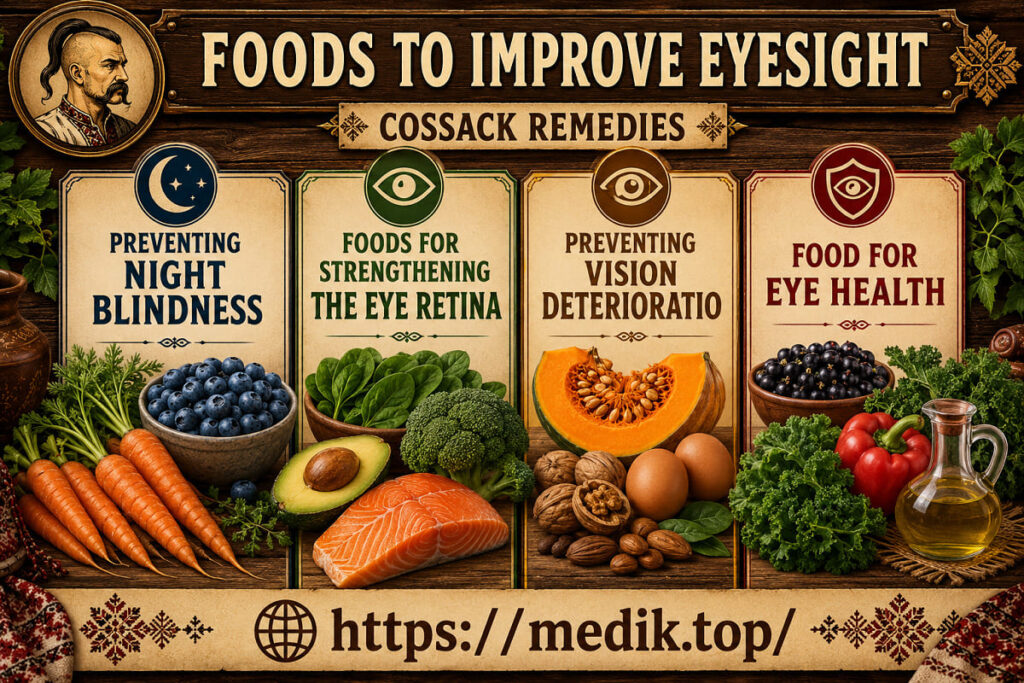
👁️ Foods for Strengthening the Eye Retina
To assist in strengthening the eye retina, physicians often recommend lutein supplements. This substance is a natural structural component of the retina. However, you can achieve excellent results by regularly eating:
- Pumpkins;
- Zucchini;
- All types of cabbage and cruciferous vegetables;
- Spinach;
- Legumes (beans and peas);
- Corn.
By regularly consuming these foods to improve eyesight, you can support your retina naturally without relying solely on drugstore supplements. Nevertheless, consulting a professional healthcare provider is always recommended for personalized advice.
🧿 Preventing Vision Deterioration
For effective preventing vision deterioration, it is vital to enrich your diet with Vitamin E (tocopherol). It can be found in:
- Butter and unrefined, cold-pressed vegetable oils;
- Egg yolks;
- Walnuts;
- Black currants;
- Sweet cherries;
- Rowanberries;
- Broccoli;
- Fresh or canned green peas;
- Parsley.
💊 Improve Your Sight with B-Complex Vitamins
B-complex vitamins play a massive role in ensuring our eyes see clearly.
Vitamin B1 (thiamine) helps lower intraocular pressure and enhances visual acuity. To boost thiamine levels, a Cossack characterist would recommend using the following foods to improve eyesight in your daily meals:
- Whole grain bread;
- Bran;
- Buckwheat and oatmeal;
- Millet;
- Peas and other legumes;
- Peanuts;
- Walnuts;
- Eggplants;
- Broccoli and cauliflower;
- Parsley;
- Beef and pork liver;
- Lean pork;
- Egg yolks;
- Milk;
- Brewer’s yeast.
Vitamin B2 (riboflavin) is responsible for light perception and color distinction. We absorb it from leafy green vegetables and other whole sources:
- Broccoli;
- Green onions;
- Bananas;
- Apricots;
- Brewer’s yeast;
- Organ meats;
- Eggs;
- Milk and dairy products.
Cottage cheese and hard cheeses are exceptionally rich in riboflavin.
For the blood vessels that nourish the eyes and the optic nerve, Vitamin B3 (PP / Niacin) is crucial. It is found in:
- Fish;
- Eggs;
- Lamb;
- Chicken breast (white meat);
- Rabbit meat;
- Beef;
- Any type of cabbage;
- Dill and parsley greens;
- Potatoes;
- Mushrooms;
- Legumes and grains;
- Bell peppers.
To sharpen visual acuity, the body also requires Vitamin B5 (pantothenic acid). It is highly abundant in:
- Dairy products;
- Organ meats;
- Oatmeal and buckwheat;
- Any type of cabbage;
- Leafy green vegetables;
- Peas and beans;
- Hazelnuts.
To prevent vision deterioration caused by age-related vascular changes or atherosclerosis, look for foods rich in Vitamin B9 (folic acid). Include plenty of spinach, head lettuce, root vegetables, cucumbers, apples, bananas, and asparagus in your diet.
For strengthening the optic nerve and ensuring healthy blood supply to the eyeball, Vitamin B12 (cyanocobalamin) is vital. It occurs naturally only in animal-derived products, particularly eggs, cheese, meat, and beef liver.
Finally, to strengthen ocular capillaries, incorporate these foods into your meals more often:
- Citrus fruits;
- Buckwheat;
- Red cabbage;
- Beets;
- Parsley;
- Lettuce.
During the summer season, enjoy fresh berries:
- Blueberries;
- Bilberries / Huckleberries;
- Blackberries;
- Black currants;
- Dark varieties of gooseberries;
- Juneberries (Saskatoon berries);
- Mulberries.
These summer fruits are packed with Vitamin P (bioflavonoids), which fortify vascular walls.
❓ Food for Eye Health
Now, a Cossack characterist offers a few traditional recipes that help preserve good sight and support failing vision. First and foremost, it is important to remember that a proper diet is just one aspect of food for eye health. You cannot completely reverse complex vision issues on your own through diet alone. Proper treatment requires a consultation with an ophthalmologist. However, a diet rich in targeted vitamins and nutrients protects your eyes for years and accelerates recovery during medical treatments.
😎 What are the benefits of blueberries for the eyes, and how can you prepare them?
Blueberries are a classic remedy for any vision-related concerns. They are highly effective for maintaining and restoring visual acuity. Furthermore, they aid in regenerating rhodopsin—the light-sensitive pigment of the retina — improving night vision even in low-light environments.
Old-Style Blueberry Kissel (Thick Berry Drink)
✔ 7 oz (200 g) fresh or frozen blueberries;
✔ 0.5 cup granulated sugar;
✔ 4 tsp potato starch (or cornstarch);
✔ A pinch of citric acid;
✔ 3.5 cups water.
Sort and rinse the blueberries in cold water. Mash them thoroughly in a bowl, pour hot water over them, and boil for 8–10 minutes. Strain the broth, stir in the sugar, add the citric acid, and bring to a boil once more. Dilute the starch in a small amount of cold water, pour it into the boiling berry mix while stirring rapidly, and bring back to a boil for just a moment until thickened. Pour into individual bowls or cups and let it cool.
🥕 Is eating carrots actually beneficial for eyesight?
Is eating carrots actually beneficial for eyesight?
Yes, absolutely! Carrots contain a massive amount of carotene (provitamin A), which the human body converts into active Vitamin A. They are also packed with B-complex vitamins and ascorbic acid (Vitamin C).
Carrots and carrot-based meals are highly recommended for seniors, as well as professionals whose work demands intense visual focus, such as drivers, pilots, and computer specialists.
Cossack Salad with Carrots, Apples, and Green Onions
✔ 3–4 medium carrots;
✔ 2–3 crisp apples;
✔ A small bunch of green onions;
✔ 4 tbsp sour cream (low-fat or traditional).
Grate the peeled carrots and cored apples on a coarse grater. Finely chop the green onions. Combine all ingredients in a bowl, toss well, and dress with sour cream. Garnish with a few apple slices and chopped green onions on top.
🎃 What are the benefits of pumpkin for eye health?
Pumpkin is a cornerstone food required for supporting and rebuilding ocular health. The powerful combination of carotene and Vitamin E found in pumpkin sustains the mucous membranes of the eye and relieves strain in weakened eyes. Remarkably, pumpkin contains five times more carotene than carrots and three times more than beef liver.
Traditional Cossack Pumpkin Soup with Millet
✔ 10 oz (300 g) fresh pumpkin pulp;
✔ 4 cups (1 liter) milk (or a milk-and-water blend);
✔ 1/4 cup millet;
✔ 1 tbsp high-quality clarified butter (ghee);
✔ 1 tbsp raw honey.
Wash, peel, and cube the pumpkin. Drop it into boiling milk or a milk-water mixture and cook until halfway soft. Lightly toast the millet in a dry skillet until fragrant, rinse, and parboil it in a separate pot until half-done. Add the parboiled millet and honey to the pumpkin soup, and simmer until both the pumpkin and grains are fully tender. Stir in the clarified butter right before serving.
Enjoy these exceptional foods to improve eyesight, and keep your vision sharp and healthy!