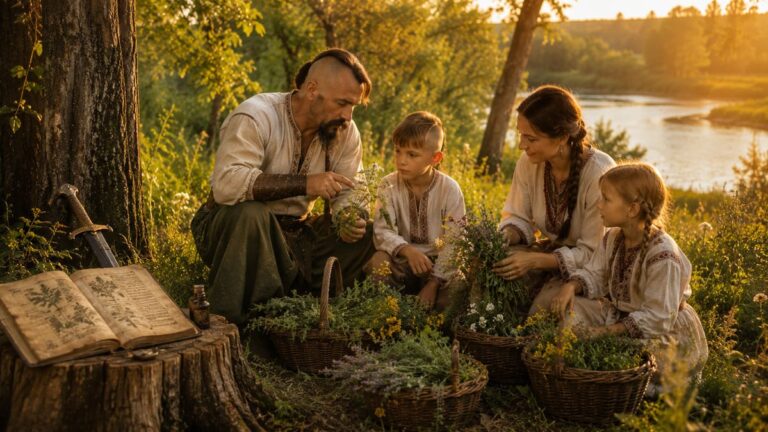
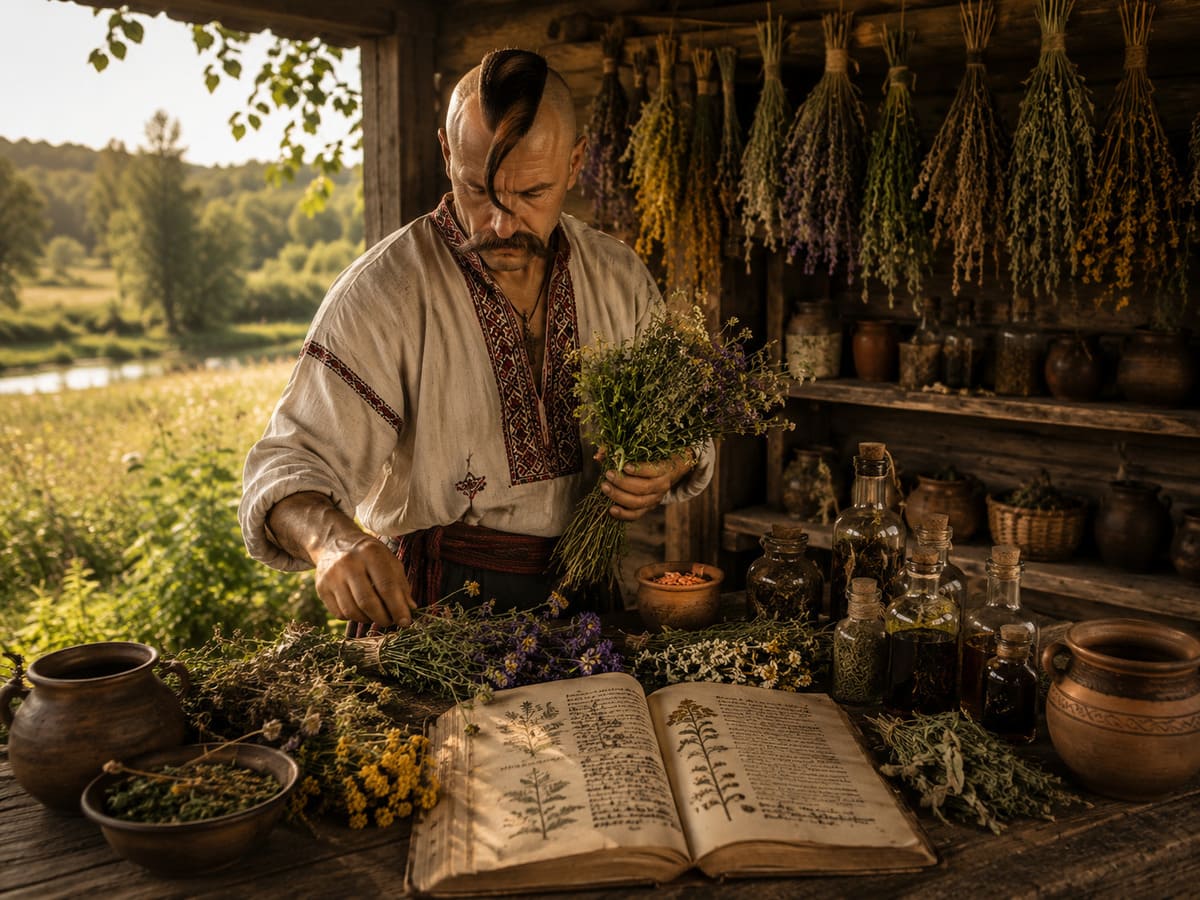

Nature has always been the first pharmacy. The Cossack charakternyky knew this better than anyone — gathering herbs before sunrise, healing body and spirit together. Slavic Folk Healing brings their ancient wisdom back to life through recipes, remedies and traditions that no pill can replace.

Discover Slavic Folk Healing through the eyes of Cossack charakternyky — herbs, roots and remedies passed down through centuries of living tradition.

We all want to see our children grow up healthy — and to feel strong and full of life ourselves. Yet illness is woven into the human experience from the very beginning. As children, our mothers healed us. As adults, we learn to heal ourselves. Or we reach for a pill, hoping it will fix everything quickly so we can keep moving. But read the label on any medication — even the most common ones carry warnings, contraindications, and side effects. There is no such thing as a truly harmless tablet.

Slavic Folk Healing does not ask you to throw away your prescriptions. Modern medicine has its place, and no one here will tell you otherwise. But it does ask you to remember what nature has given us — the extraordinary wealth that grows quietly around us, waiting to be used. Whoever created this world of plants and living things was deeply wise. Take any blade of grass, any root, any berry — it heals something. We simply forgot how to listen.

Roots Older Than Memory

The healing traditions gathered under Slavic Folk Healing did not begin yesterday. Herbal medicine was practiced among Slavic peoples long before the baptism of Kyivan Rus. The Izbornik of Grand Prince Svyatoslav Yaroslavovych (1076) already described dozens of medicinal plants in careful detail. A herbal compendium called Mazi, compiled by the granddaughter of Volodymyr Monomakh, has survived to this day — a testament to how seriously our ancestors took the knowledge of plants.

As Rus expanded its connections with the wider world, new herbs arrived from Alexandria, Baghdad, Genoa and Venice. By the 16th and 17th centuries, dedicated herbals were being compiled and circulated: Travolikar, Zelnyk, Zhyznenyk and others. The clergy joined this tradition too — monasteries cultivated healing gardens long before secular healers did, and monks and nuns considered it their sacred duty to tend to the sick.

The Way of the Cossack Charakternyk

Among all who carried this healing tradition, none embodied it more fully than the Cossack charakternyky — the warrior-healers of the Ukrainian steppe. For the charakternyk, the boundary between the physical and the spiritual did not exist. Healing was never merely about the body. It was about restoring the whole person — their strength, their spirit, and their connection to the natural world.

The charakternyk knew which herbs to gather before sunrise and which to collect at the full moon. He knew that the same plant, harvested at the wrong time or without the proper intention, would lose half its power. He understood that healing began with prayer — not as superstition, but as an act of alignment with something greater than human knowledge alone.

This is why Slavic Folk Healing on these pages is never separated from its spiritual roots. Recipes and remedies are presented alongside their context: the prayers that accompanied them, the seasonal wisdom that governed their use, and the deep reverence for nature as a gift — not a resource to be exploited, but a living treasury to be approached with gratitude.

Nature as Sacred Gift

Every herb, every fruit, every root found in these traditions was understood as a blessing — something given freely by the Creator for the benefit of those willing to learn its ways. Even the most toxic plants found their purpose in traditional pharmacy. Nothing in nature was considered useless. Everything had its place and its moment.

People learned by living — by observing, by experimenting, by passing knowledge from grandmother to grandchild, from healer to apprentice, from the old world to the new. That unbroken chain of transmission is what Slavic Folk Healing exists to honor and continue.

So before you begin, as the charakternyk would before any important work, take a moment. Breathe. And approach this knowledge with the respect it deserves.

Be well.