
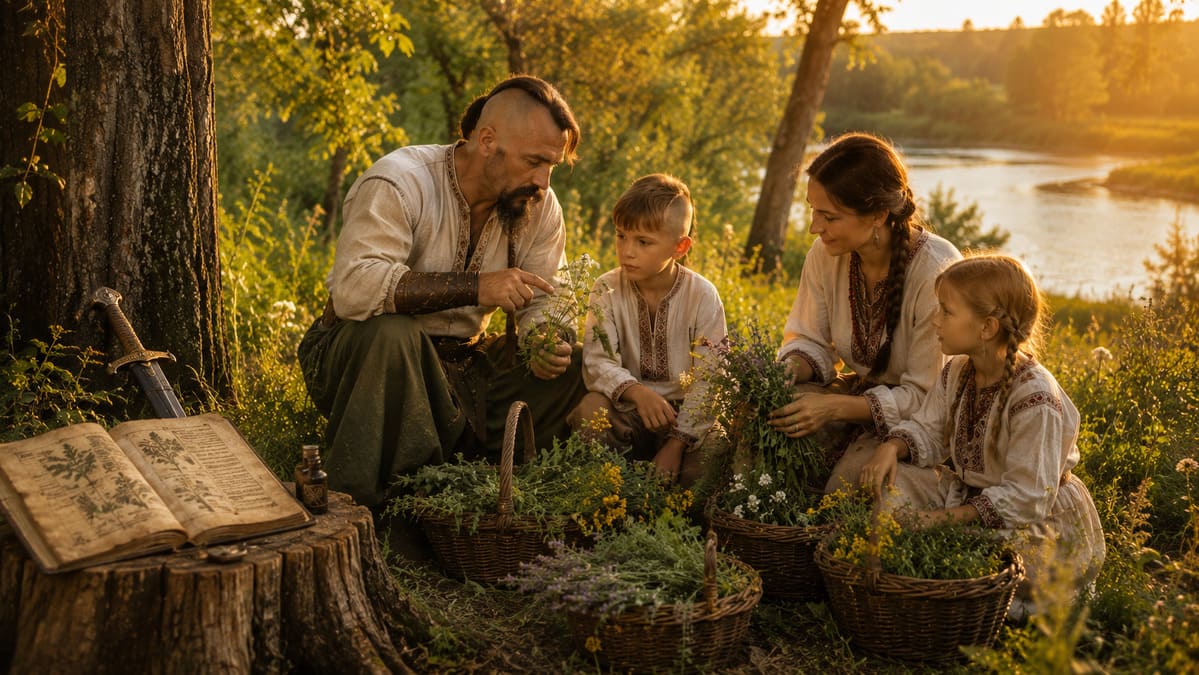
When Nature Is at Its Strongest: A Medicinal Herb Harvesting Calendar for the Whole Year
Many people ask me the same question: does it really matter when you pick St. John’s Wort or dig up a dandelion root? My answer has never changed. Timing decides everything.
In the Ukrainian folk medicine tradition passed down through the Cossack charakternyky, there is a concept known as the “peak of power” — the precise window when the concentration of healing compounds in a plant reaches its absolute maximum. Miss that window, and you may still gather something pleasant to look at. But you will not gather medicine.
I have spent years systematizing this knowledge, combining my own practical experience with the wisdom of ancestors who harvested these plants long before laboratories existed to confirm what they already knew. The result is this medicinal herb harvesting calendar — your guide to wildcrafting with intention, timing, and the kind of respect for nature that the old healers never forgot.
Зміст
Early Spring: Buds, Bark and the First Roots (March)
March is when nature releases its first energy after winter. The ground is barely thawed, but the plants are already moving. This is the moment for two of the most powerful early-season harvests.
Silver Birch (Betula pendula) — collect the buds while they are still closed and sticky with resin. Once they begin to open, the active compounds start to disperse.
English Oak (Quercus robur) — harvest the bark from young branches in early spring, before the sap rises fully. This is when tannin concentration is at its peak.
As soon as the snow melts, dig the roots of Burdock (Arctium lappa) and Dandelion (Taraxacum officinale). These roots have stored the entire winter’s worth of inulin and bitter compounds. By late spring that energy will have moved upward into the leaves and flowers. Dig them now.
Mid-Spring: Leaves and the Rising Sap (April and May)
April and May bring rapid growth and the best window for leafy harvests.
Dandelion (Taraxacum officinale) and Burdock (Arctium lappa) — leaves and roots both.
Primrose (Primula veris) — gather the flowers and leaves in April while they are fresh and full of vitamin C.
In May, move to:
Stinging Nettle (Urtica dioica) — harvest the young top leaves before the plant flowers. Nettle at this stage is at peak iron and chlorophyll content.
Greater Celandine (Chelidonium majus) — collect the whole above-ground part at the start of flowering. Handle with care: the orange sap is potent.
Lily of the Valley (Convallaria majalis) — flowers and leaves at full bloom. Note: this plant is toxic in large doses. Use only in established traditional preparations.
Silver Birch (Betula pendula) — young leaves in May, before they toughen.
Midsummer: The Golden Season of Wildcrafting (June and July)
June and July are the heart of the medicinal herb harvesting calendar. Most flowering herbs reach their peak during these two months, and a serious wildcrafting calendar is built around them.
I always go out in the early morning, after the dew has lifted but before the sun grows strong. Heat accelerates the loss of volatile oils — the same compounds that give herbs their healing power.
June harvests:
German Chamomile (Matricaria chamomilla) — flowers only, fully open. This is one of the most important anti-inflammatory herbs in the Slavic folk tradition.
Linden (Tilia cordata) — flowers and bracts at peak bloom. Linden flower tea was the standard Cossack remedy for fever and cold.
Wild Thyme (Thymus serpyllum) — flowering tops. Rich in thymol, a natural antiseptic.
Plantain (Plantago major) — leaves throughout June and into summer.
July harvests:
St. John’s Wort (Hypericum perforatum) — flowering tops with open blooms. One of the most studied medicinal plants in the Slavic tradition, valued for its effect on mood and wound healing.
Oregano (Origanum vulgare) — flowering tops at full bloom.
Yarrow (Achillea millefolium) — flowers and upper stems.
Peppermint (Mentha piperita) — leaves and flowering tops before full bloom opens.
Important: Dry all herbs in a shaded, well-ventilated space. Shade preserves both color and volatile oils. A well-dried herb keeps its fragrance. A poorly dried herb keeps nothing.
Late Summer: Flowers, Cones and Resinous Harvests (August)
August shifts toward resinous, bitter and seed-bearing plants.
Pot Marigold (Calendula officinalis) — flower heads, harvested continuously as they open. Regular picking extends the flowering season.
Common Tansy (Tanacetum vulgare) — flower baskets before full opening.
Mugwort (Artemisia vulgaris) — upper flowering parts. A plant with deep roots in Slavic folk magic and digestive medicine.
Hops (Humulus lupulus) — cones at full maturity, before they begin to dry on the vine.
Early Autumn: Berries, Fruits and the First Root Harvests (September)
September is the season of abundance. The charakternyk called autumn fruits “dense medicine” — concentrated by the whole summer’s sun into small, potent packages.
Rosehip (Rosa canina) — berries after the first light frost, which softens the skin and increases vitamin C availability.
Hawthorn (Crataegus monogyna) — ripe berries for heart and circulatory support.
Viburnum (Viburnum opulus) — berries after frost. One of the most beloved plants in Ukrainian folk medicine.
Valerian (Valeriana officinalis) — roots in September, after the above-ground parts have died back. The sedative compounds are most concentrated at this stage.
Late Autumn: Deep Roots and Winter Reserves (October)
October is the final window for root harvesting before the ground freezes.
Marshmallow (Althaea officinalis) — thick roots after the stems have completely died.
Chicory (Cichorium intybus) — roots rich in inulin, best after the first frosts.
Comfrey (Symphytum officinale) — roots for topical preparations. Harvest after the plant has fully died back above ground.
The Complete Medicinal Herb Harvesting Calendar at a Glance
| Month | Plant | Part to Harvest |
|---|---|---|
| March | Birch (Betula pendula), Pine (Pinus sylvestris), Oak (Quercus robur) | Buds, bark |
| April | Dandelion (Taraxacum officinale), Burdock (Arctium lappa), Primrose (Primula veris) | Roots, leaves |
| May | Nettle (Urtica dioica), Greater Celandine (Chelidonium majus), Lily of the Valley (Convallaria majalis), Birch (Betula pendula) | Leaves, whole above-ground part |
| June | Chamomile (Matricaria chamomilla), Linden (Tilia cordata), Thyme (Thymus serpyllum), Plantain (Plantago major) | Flowers, leaves |
| July | St. John’s Wort (Hypericum perforatum), Oregano (Origanum vulgare), Yarrow (Achillea millefolium), Peppermint (Mentha piperita) | Flowering tops |
| August | Calendula (Calendula officinalis), Tansy (Tanacetum vulgare), Mugwort (Artemisia vulgaris), Hops (Humulus lupulus) | Flowers, cones |
| September | Rosehip (Rosa canina), Hawthorn (Crataegus monogyna), Viburnum (Viburnum opulus), Valerian (Valeriana officinalis) | Berries, fruits, roots |
| October | Marshmallow (Althaea officinalis), Chicory (Cichorium intybus), Comfrey (Symphytum officinale) | Roots and rhizomes |
The Four Golden Rules of Wildcrafting
The charakternyky did not simply grab what grew closest. They followed principles that maximized both the potency of what they gathered and the health of the plants they gathered from.
- Roots. Dig in early spring before leaves appear, or in late autumn after the above-ground parts have died. This is when all the plant’s energy lives underground.
- Leaves and stems. Harvest at the beginning or peak of flowering, in dry weather, after the morning dew has fully lifted.
- Flowers. Only at full open bloom. A wilting flower has already begun losing its active compounds. Never harvest what is past its peak.
- Fruits and seeds. Wait for full ripeness, but act before heavy frosts or natural seed dispersal begins. The window is short — know your plants.
How to Store Your Harvest: Keeping the Power Alive
Gathering at the right moment is only half the work. If you store a perfectly harvested herb incorrectly, you can undo everything within days.
Choose the Right Container
Glass jars with tight lids work best for aromatic herbs: peppermint, lemon balm, thyme, oregano. Essential oils are volatile. Only airtight glass keeps them from escaping.
Linen or cotton bags suit roots, bark, rosehips and hawthorn berries. Natural fabric allows the material to breathe, preventing mold.
Kraft paper bags are good for leaves and flowers: nettle, linden, chamomile. Paper protects from light while letting residual moisture escape.
Darkness Is Your Ally
Never store herbs on a windowsill or open shelf. Direct light breaks down chlorophyll and the glycosides responsible for healing effects. Your herb collection belongs in a cool, dry, closed cabinet.
Shelf Life Guidelines
Even with perfect storage, herbs do not last forever:
- Flowers and leaves: 1 to 2 years. After that, color and fragrance fade along with potency.
- Roots, fruits and bark: 3 to 5 years. These denser materials hold their compounds longer.
Always label every jar and bag with the plant name and the year of harvest. It takes ten seconds and saves you from using three-year-old chamomile as medicine.
5 Signs Your Herb Harvest Should Be Discarded
Even careful storage does not guarantee indefinite quality. I recommend a full inspection of your stocks every six months.
1. Faded or Discolored Appearance
Bright green mint turned grey-brown. Golden chamomile gone dark. These color changes signal that active compounds have degraded. The herb will not heal.
2. Loss of Characteristic Scent
Crush a small amount between your fingers. If you smell dust, old hay or nothing at all instead of the plant’s distinctive fragrance, the essential oils are gone. Discard it.
3. Clumping or Dampness
Herbs that have stuck together or feel moist have absorbed humidity. Even if you cannot see mold yet, bacterial activity has already begun.
4. White Film, Black Spots or Fine Webbing
Any sign of mold or pantry moths means the entire container must go. Do not attempt to salvage part of it. The contamination spreads invisibly through the whole batch.
5. Crumbling to Powder
A well-dried herb snaps crisply. If yours crumbles to grey dust at the lightest touch, it has been over-dried or stored too long. Either way, it has nothing left to give.
Important: If you are in doubt, throw it out. Fresh medicine from a living plant is always worth more than old medicine from a degraded one. Nature rewards those who respect her rhythms.
This medicinal herb harvesting calendar is your guide through the whole growing year. Follow these windows, respect these rules, and what you gather will be genuine medicine — not decoration. Nature does not reward hurry. She rewards attention.
P.S. Every region has its own timing. In warmer climates, spring comes earlier. In higher elevations, summer blooms arrive late. Do your own plants flower sooner or later than the calendar suggests? Share your observations in the comments. Let us build this wildcrafting calendar together, plant by plant, season by season.