
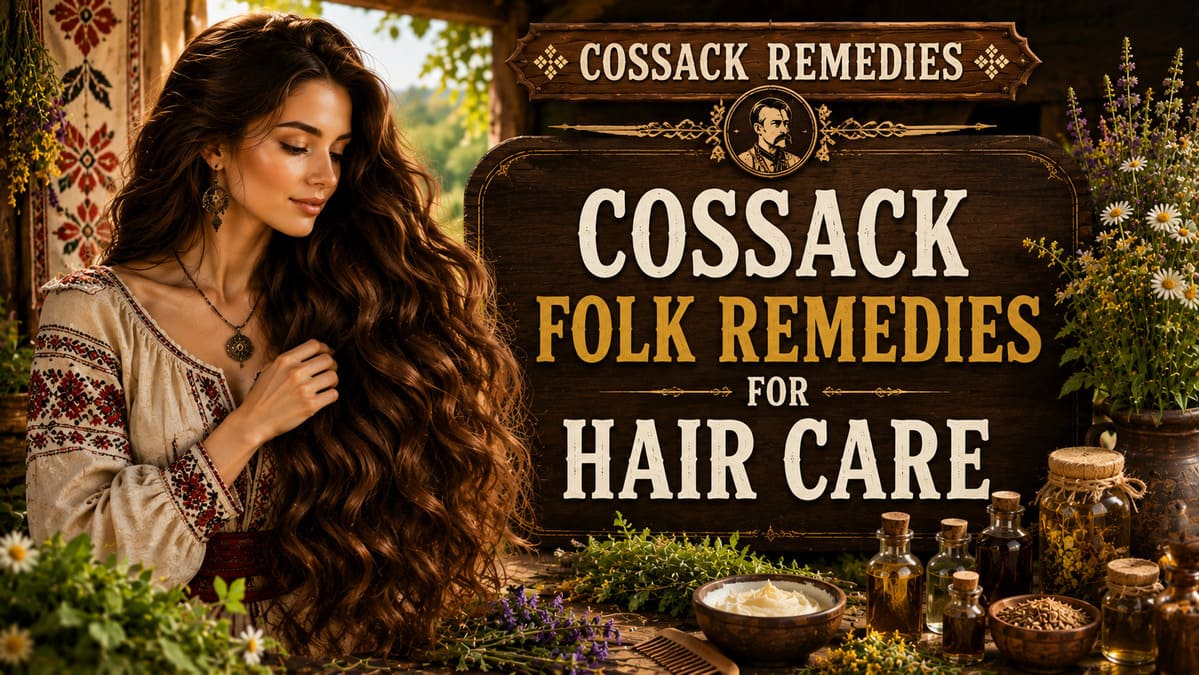
Cossack Folk Remedies for Hair Care: 7 Useful Tips
Just like every other part of the human body, hair is subject to the aging process. At times, it gets sick — either mildly or severely. For generations, people have learned to combat these ailments, including those affecting the hair. Over time, a rich variety of Cossack folk remedies for hair care was gathered. Some hair conditions (such as seborrhea) are relatively easy to cure, while others (such as baldness) continue to defy the best efforts of medical professionals.
Зміст
7 Useful Tips
To ensure your hair always remains healthy, you need to follow a few very simple rules.
- Strive to lead a healthy lifestyle. Hair is an integral part of the whole human body and a direct indicator of its overall state. A drop in vital energy or internal illnesses immediately impact the condition of your hair — it becomes thin, brittle, and unmanageable. Its nutrition and blood supply deteriorate. It is as if the body concentrates all its strength on the main goal — fighting the illness — and cuts off the secondary needs, such as nourishing the hair.
- Strictly follow the rules of personal hygiene. There are a number of diseases spread by bacteria and harmful fungi. These conditions can easily be transmitted if you use someone else’s combs and brushes. Some medical experts even believe that ordinary seborrhea can be contagious. Brushes, combs, and hairpins must be yours, and yours alone.
- Practice reliable Cossack folk remedies for hair care. Regularly brush, massage, and wash your head, and occasionally apply nourishing scalp rubs. By doing this, you will significantly improve the appearance of your hair and preserve it for many years to come. Carefully groomed hair will withstand any adversity.
- “Do not torture your hair,” as the saying goes. Could this advice apply to you? Look for the root causes of your hair troubles in recent salon procedures: perhaps a bleaching, coloring, or perm didn’t go quite right? Is your hair pulled back too tightly with clips? Or maybe your hairstyle is too complex, preventing your hair from resting properly overnight? Consider giving your hair a break and embracing a more natural look, even if just for a while. In this, as in other matters, the advice of a qualified hairstylist can be highly beneficial.
- Closely monitor the condition of your hair. Every day during your morning routine, take a close look at your hair: has dandruff appeared, is your hair thinning or developing split ends, or do you feel an itchy scalp?
- Act immediately at the first sign of troubling symptoms, and for the most part, these can be managed with Cossack folk remedies for hair care. Pinpoint exactly what the issue is and start treatment without delay. Often, it is quite enough to apply a nourishing rub or simply get a shorter haircut.
- If your home treatment does not yield results within two to three weeks, seek professional help at a cosmetic clinic or medical center.
Cossack Folk Remedies for Hair Care
Now, let us examine one by one some of the ailments that can afflict your hair.
Folk Remedies for Dandruff
This is the most common scalp condition. The white flakes that form at the roots of the hair are actually pieces of dead skin cells shed from the scalp. Dandruff is a clear sign that your hair is not doing entirely well. If noticed in time, time-tested Cossack folk remedies for hair care can help you successfully manage it.
A folk remedy for dandruff. Start by soaking 200 grams of black rye bread in 0.5 liters of boiling water. Once it cools down, wash your head with this mixture, rinse thoroughly, and brush your hair well after it dries. More often than not, this simple method is enough to make dandruff disappear.
However, if the scalp irritation has progressed too far (in other words, if you have developed seborrhea), you will need to consult a specialist. Vigorously brushing your hair or scalp can only worsen the situation — half-detached skin particles will be ripped away, leaving irritated areas completely exposed to bacteria.
Causes of Dandruff
There are many reasons behind the appearance of dandruff. It could be a lack of fresh air, poor execution of Cossack folk remedies for hair care, or irregular brushing. Fatigue, emotional stress, poor diet, and even the climate can also play a role — dandruff is notably more common among residents of northern regions than those living in warmer climates. Medical professionals also point to hormonal imbalances and suggest hereditary factors. Looking at this extensive list, you can easily guess that the true, definitive cause of dandruff remains unknown to anyone for now.
Diet for Dandruff Control
If you notice dandruff, first of all, start monitoring your diet. It is highly likely that you are consuming too much sugar and starch, which leads to excess acidity in the body, triggering skin rashes. Furthermore, consuming too many fats can overstimulate the sebaceous glands, making the condition even worse. Try introducing lean meat, vegetables, fresh salads, and fruits into your daily meals.
Keeping the scalp clean is absolutely essential. Try to use specialized shampoos more frequently, and above all, rely on Cossack folk remedies for hair care—this applies to both dry and oily seborrhea. The simplest and most reliable home treatment is to mix 1 part apple cider juice (or pure apple cider) with 3 parts water and rub this mixture into your scalp 2 to 3 times a week.
Oh, My Gray Hair
Sooner or later, your hair will turn gray — this depends primarily on two main factors:
- The lifestyle you lead. It depends on how calm and balanced your life is, whether you manage to avoid chronic stress, maintain a proper daily routine, and watch your diet.
- Your genetic predisposition. If your parents turned gray early in life, you will likely face this issue around the same age as well.
Typically, gray hair begins to appear between the ages of 35 and 40, though sometimes even earlier. Premature graying can occur — occasionally even overnight — as a result of a severe illness, profound grief, or sudden emotional shock.
Please note! To help prevent premature graying, it is crucial to maintain a healthy lifestyle. Your diet must be rich in various vitamins, especially vitamins A, B1, B2, B6, and nicotinic acid (niacin).
Reversing gray hair to restore its original dark color is generally impossible, which naturally brings up the option of hair dyeing. Yet, as the old folks say, “gray hair doesn’t spoil a noble look.” Hair touched with gray can look genuinely beautiful. However, one rule must be strictly followed: gray hair requires even more meticulous care than colored hair. The slightest neglect — especially if you dismiss Cossack folk remedies for hair care — will leave your head looking unforgivably untidy.